A manufacturing company wins a big contract. While the demands for production have grown, the plant doesn’t suddenly have more floors or more experienced workers. Adding another shift might help temporarily, but it may be a source of new labor and training, supervision, and quality control requirements.
These examples show an significant reason to use robotics automation. Robotics doesn’t just mean replacing human workers with machines. It could be utilized to change the way manufacturers utilize their current production capacity.
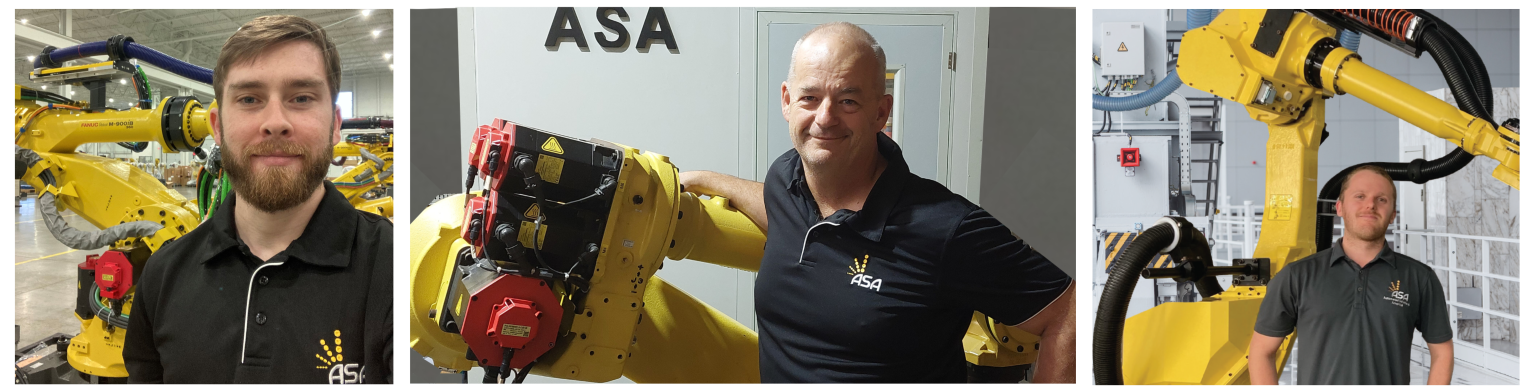
Image credit: automatedsolutions.com.au
Check out the Seconds that Change Between Products
Manufacturing inefficiency doesn’t have to be dramatic. If an operator takes 15 minutes putting a piece of equipment in place after which another 10 seconds are spent applying material, and several more seconds transferring it to the next process. On one piece it’s not much of a difference. If repeated a thousand times, these seconds can result in significant production delays.
It is the same with wasted material. A tiny amount of leftover coating or dispensing material that is multiplied throughout a production run that is high-volume could result in a significant expense.
The companies that are considering robotic automation Australia will gain from analyzing these small routine losses before they decide what equipment to purchase. ASA’s needs analysis is intended to identify bottlenecks, quality issues, waste, as well as other limitations to process which could affect the automation project.
Robots have to integrate into the process.
The selection of a robot represents only one decision in engineering. Tooling, guardings, controls sensors, conveyors and fixtures could also be required. Engineers must consider reach and payload while also determining how the robot can move around its work area and interact with the environment surrounding it.
ASA provides concept development, system design, CAD simulation, and offline programming as part of its approach to FANUC robotic automation. Engineers are able to explore configurations for the system and calculate cycles prior to when the finished system is installed on the factory floor. It is particularly helpful when there’s a finite amount of space or the new robotics is required to be integrated with an existing production line.
Paint and Dispensing Shows Why Replicability is Crucial
Controlled movement is essential in some manufacturing processes. Imagine coating hundreds or thousands of parts. It’s not enough just to finish each component in a short time. The movement, distance, speed, and application have to be monitored from the start of the production run to the end.
ASA has specialists working with painting and dispensing applications across various industries, including automotive and aerospace. Industrial robotics automation in these areas will allow for repeatable movement and reduce the risk of employees to physical demanding processes or processes that could cause harm.
A better management of waste material can also aid in productivity improvement by decreasing the amount of unneeded material consumed.
Even after the installation the system requires users
Automating doesn’t completely eliminate the need for manufacturing expertise. Automation can alter the capabilities needed for maintaining and operating the process.
Employees must be able to detect abnormal behavior and identify problems, as well as take the necessary maintenance. The demands for production can shift in time, meaning that procedures and protocols will need to be adjusted.
ASA provides on-site training covering safe operation, programming troubleshooting, and electrical and mechanical maintenance. The company also provides maintenance and support to check the condition of equipment, and dealing with wear throughout the lifespan of the equipment.
Capacity is about more than just getting faster work done
The expansion of capacity for Australian manufacturing companies doesn’t involve buying a bigger facility or adding more employees on repetitive processes. One of the best questions to ask is whether the current manufacturing process is able to be improved.
ASA has been working on and integrating automation systems since 2002. It has assisted manufacturers in Australia and also projects internationally. Its strategy combines analysis of needs along with engineering simulation FANUC integration along with training and servicing.
Automating for automation’s sake isn’t the main goal. A system that is effective should provide the manufacturer something tangible in terms of increased reliability, consistent quality, safer processes, less waste, or a greater capacity in the existing factory.