Surface finishing has transformed from a labor-intensive job to an engineering procedure that is precise. The quality of coating has an immediate impact on durability, corrosion resistance and product perception in the current manufacturing environment. Many factories employ paint robots to improve control and uniformity as global standards tighten up and customers expect flawless finishes.
Modern paint robots provide structured motion and programmable precision to applications which previously relied on operator skills. Automating the paths and angles of spray and speed, eliminates numerous issues that lead to inconsistent film construction or excessive material usage. This results in coating processes that are predictable and supports First Time Quality.
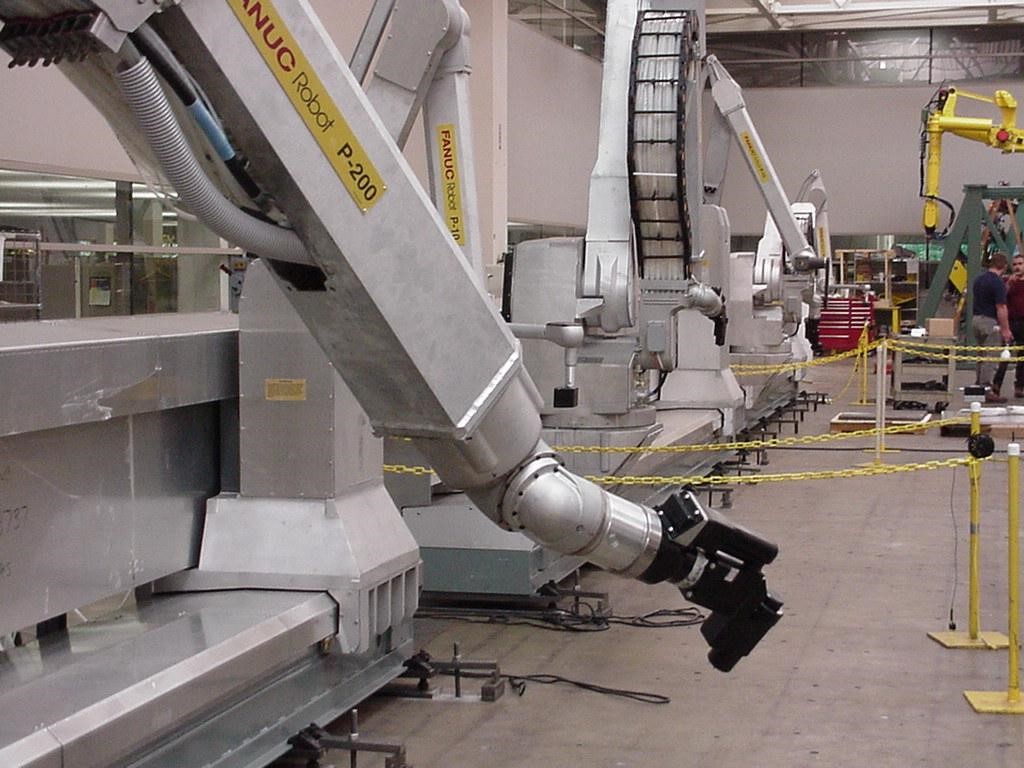
Image credit: automatedsolutions.com.au
Efficiency and consistency are the key to measurable results
Due to fatigue, or just small variations in technique, manual painting may result in changes in thickness and coverage. Paint robots eliminate that variation because they repeat the same motion pattern in every production process. This repetition level ensures an even surface finish and an optimal distribution of the material across every component.
A robotic paint system can increase the efficiency of transfer. Overspray of paint can be decreased when the distance and direction between the applicator and component’s are kept precisely. A lower amount of material waste directly affects costs, while reducing CO2 emissions from volatile organic compounds help environmental compliance initiatives.
Integrated fluid handling within paint robotics ensures accurate mixing ratios for multi-component coatings. It eliminates any inconsistencies which can compromise the integrity of the finished. Flexible flow control coupled with parameter settings that can be programmed allows manufacturers to adjust the atomisation or spray pattern without affecting production.
Safety and productivity
Adopting a robot painter has an enormous benefit in terms of increased efficiency. In contrast to manual processes, robotic paint cells run continuously and with very little interruption. Once they are programmed, the paint cells produce an even output, without breaks or continuous supervision.
It is crucial to think about safety in any facility that utilizes bi-component solvents or solvent-based coatings. Paint that is atomised can cause hazardous atmospheres, particularly when handling flammable or reactive materials. Modern paint robots can work without risk in harsh situations. This decreases the chance of exposure to harmful chemicals and increases workplace safety.
Conveyor tracking technology also improves productivity by enabling robotic paint application even when components are in motion. This permits for a greater working area and helps keep production lines moving efficiently.
Australian Automation Expertise Supporting Industry
Access to automation partners who have experience is vital for those who wish to modernize finishing processes. In Australia, Automated Solutions has earned a reputation for providing advanced robotic integration services. The team has vast experience in automation engineering, and is certified as FANUC robot integration specialists. They aid businesses in the implementation of robot paint solutions that are tailored to their needs.
Automated Solutions combines technical expertise and practical industry experience to assist manufacturers in evaluating existing processes and developing robotic paint cells that are optimized. Facilities can get a better understanding of improvements in performance through collaboration, simulation and system integration.
Implementing paint robotics is not simply about automation; it is about tangible improvements in quality, efficiency, and safety. The most well-designed paint robotic systems transform surface finishing from a lengthy, expensive, and unreliable operation into an automated, reliable procedure. With the help of expert experts in automation, companies can increase their competitiveness and establish themselves for the long term in an increasingly complex market.